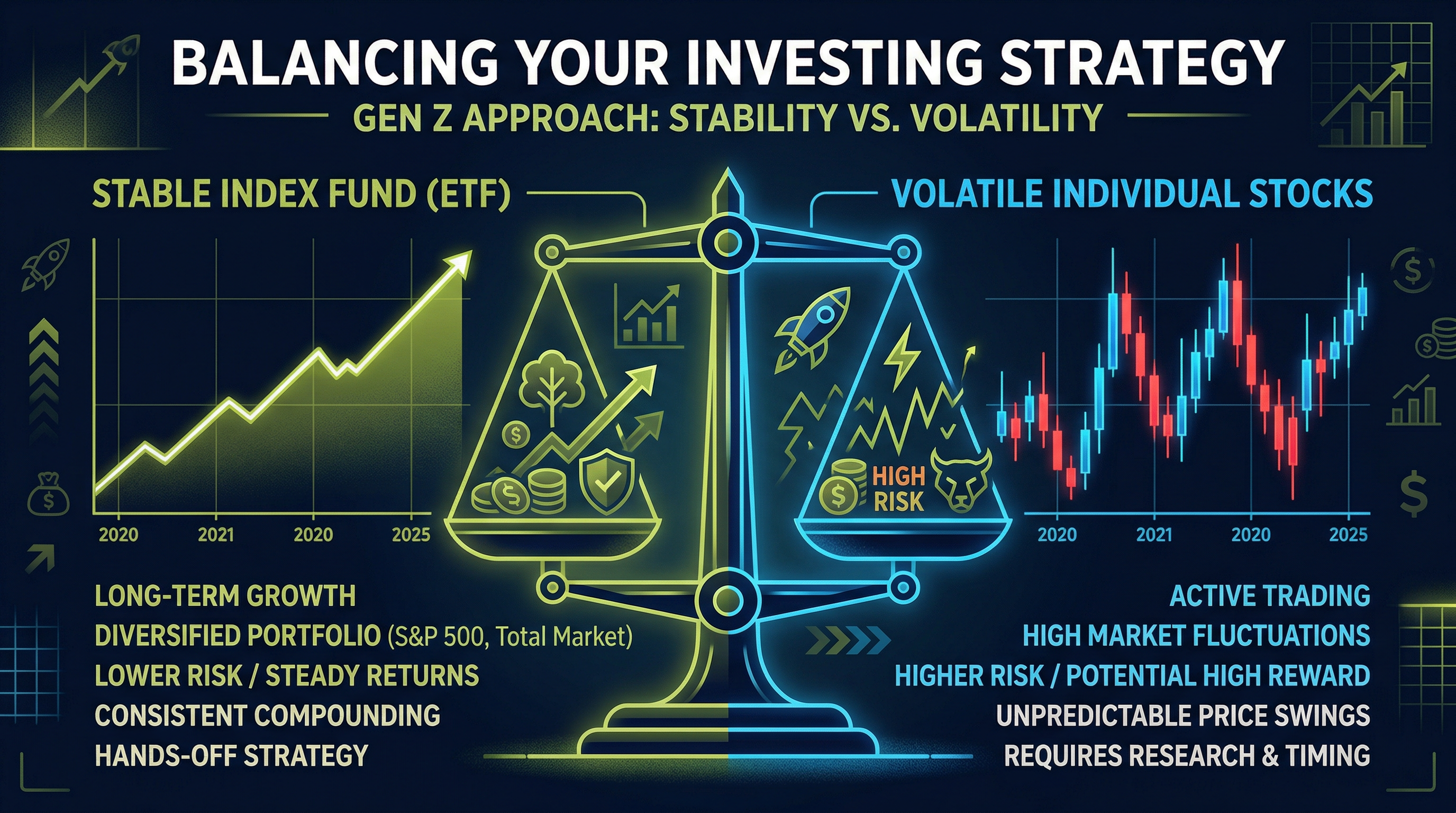
قبل عامين قسّمت أموالي الاستثمارية إلى سلتين: واحدة لصناديق المؤشرات وأخرى للأسهم الفردية. احتفظت بسجلات دقيقة. بعد عامين من تطبيق الاستراتيجيتين في آنٍ واحد بمال حقيقي، لديّ إجابة واضحة جدًا — وعلى الأرجح ليست ما تتوقعه من مدوّنة تعليم تداول.
الحجة لصالح صناديق المؤشرات قوية حقًا
دعني أكون صريحًا في هذا قبل الخوض في المقارنة. لصناديق المؤشرات دعم أكاديمي ساحق. تُظهر عقود من البيانات أن نحو 85–92% من صناديق الاستثمار المشتركة المُدارة بنشاط تُضعِف أداء مؤشرها المرجعي على مدى فترات 15 سنة. إذا كان مديرو الصناديق المحترفون بشهاداتهم وفرق بحثهم ومليارات مواردهم غير قادرين على التفوق باستمرار على S&P 500، فالاحتمالات بالنسبة لمستثمري التجزئة الأفراد ليست أفضل بكثير.
حقّق مؤشر S&P 500 عائدًا سنويًا يبلغ تقريبًا 10% (قبل التضخم) على مدى أكثر من 90 عامًا. هذا يشمل الكساد الكبير والحرب العالمية الثانية وركودات متعددة وانهيار الدوت كوم والأزمة المالية 2008 وكوفيد. مجرد شراء SPY أو VOO وإضافة مال بانتظام كان سيبني ثروة ملحوظة على فترات طويلة بجهد ضئيل.
الأرقام الصادقة من تجربتي لعامين
محفظة صناديق المؤشرات: +34.2% على مدى عامين (تتبع S&P 500 تقريبًا مع ميل نحو QQQ). محفظة الأسهم الفردية: +28.7% خلال نفس الفترة. عملت بجد أكبر بكثير على محفظة انتقاء الأسهم — ساعات من البحث أسبوعيًا — وحققت عوائد أدنى. تفوقت صناديق المؤشرات بنحو 5.5 نقطة مئوية مع الحاجة لجهد صفري تقريبًا.
لأكون واضحًا: اختياراتي للأسهم لم تكن سيئة. عدة منها أُدّيت بامتياز. لكن الخاسرين سحبوا متوسط المحفظة دون المؤشر، وهو بالضبط ما تتنبأ به الأبحاث يحدث لمعظم المستثمرين الأفراد في معظم الأوقات.
حين يمكن لانتقاء الأسهم الفردية إضافة قيمة
قبل أن تستنتج «صناديق مؤشرات فقط، إلى الأبد» — إليك أين يمكن للأسهم الفردية أن تتفوق فعلًا:
مراكز مرتفعة الاقتناع ومركّزة
إذا كانت لديك خبرة متخصصة في صناعة ما — تعمل في الرعاية الصحية وتفهم جداول تطوير الأدوية — ربما تمتلك ميزة معلوماتية حقيقية لا تُسعّرها السوق بشكل صحيح. استخدام تلك الخبرة لرهانات مركّزة في مجال معرفتك هو توليد ألفا حقيقي.
عدم كفاءة الشركات ذات الرسملة الصغيرة والصغيرة جدًا
تتابع مئات المحللين الأسهم كبيرة الرسملة (Apple وMicrosoft وغيرها) بموارد بحثية ضخمة. التسعير يكاد يكون كفوءًا — يصعب إيجاد فرص مُسعَّرة خاطئة حقًا. الشركات الأصغر بتغطية أقل يمكن أن تكون لديها كفاءة تسعير أدنى حيث يمكن للمستثمر الفردي المجتهد إيجاد قيمة يُفوّتها السوق.
آفاق زمنية أقصر (التداول مقابل الاستثمار)
للمتداولين النشطين، المقارنة بصناديق المؤشرات مضللة نوعًا — التداول والاستثمار نشاطان مختلفان. متداول التأرجح الماهر الذي يحقق 25% سنويًا من خلال التداول النشط يتفوق على المؤشر بالإدارة النشطة لا بالاحتفاظ السلبي. هنا تصبح المهارات المطوّرة عبر الممارسة على Traderise ذات قيمة حقيقية: تحويل مهارة التداول إلى عوائد يمكن أن تتفوق على المؤشرات السلبية مع مرور الوقت.
نهج «الأساسي والقمر الصناعي» يناسب معظم الناس: ضع 70–80% من أموال الاستثمار طويل المدى في صناديق ETF للمؤشرات الواسعة (أساسك — موثوق، مُثبَت، منخفض التكلفة)، واستخدم 20–30% لانتقاء الأسهم الفردية والاستراتيجيات النشطة (قمرك الصناعي — حيث تُعبّر عن اقتناع وتطوّر مهارات). يمنحك هذا عوائد بمستوى السوق على معظم أموالك مع الانخراط الفكري في انتقاء الأسهم. استخدم Traderise لتطوير مهارات القمر الصناعي دون تعريض أساسك للخطر.
التكلفة الحقيقية لصناديق المؤشرات مقابل الأسهم الفردية
تكاليف صناديق المؤشرات
نسب المصاريف: 0.03–0.10% سنويًا لصناديق ETF للمؤشرات الرئيسية. الكفاءة الضريبية: ممتازة (صناديق ETF نادرًا ما توزّع مكاسب رأس المال). تكاليف التداول: هزيلة (التداول نادر). إجمالي الاحتكاك: منخفض للغاية. هذا الهيكل المنخفض الاحتكاك هو جزء من سبب تفوق صناديق المؤشرات على المدى البعيد — في المالية، التكاليف تتراكم كالعوائد، تعمل ضدك.
تكاليف الأسهم الفردية
عمولات التداول: «مجانية» لدى معظم الوسطاء الرئيسيين (لكن فوارق العرض والطلب لا تزال موجودة). التراجع الضريبي: كل عملية بيع تُطلق حدثًا لمكاسب رأس المال. تكلفة وقت البحث: معتبرة (ما لم تُقدّر الجانب التعليمي). التكلفة العاطفية: مشاهدة انهيار أسهم فردية أصعب نفسيًا بكثير من رؤية مؤشر متنوع ينخفض. إجمالي الاحتكاك: أعلى ملموسًا، خاصةً للمتداولين النشطين في الحسابات الخاضعة للضريبة.
تدرّب على هذه الاستراتيجية بدون مخاطرة
Traderise يتيح لك التداول التجريبي بـ 10,000 دولار افتراضية باستخدام بيانات السوق الحقيقية. اختبر كل استراتيجية في هذا المقال قبل المخاطرة بدولار واحد حقيقي.
ابدأ التداول التجريبي مجاناًإطار المحفظة الأكثر منطقية
للمبتدئين (السنة 1–2)
90% صناديق مؤشرات، 10% تجريب بأسهم فردية. الهدف الرئيسي: بناء عادة الادخار والاستثمار وتجنب الأخطاء المكلفة وتعلّم تحليل الشركات الفردية دون وضع رأس مال معتبر على المحك. استخدم التداول التجريبي في Traderise للمكوّن التعليمي النشط.
للمستثمرين المتوسطين (السنة 2–5)
70% صناديق مؤشرات، 30% أسهم فردية و/أو تداول نشط. طوّرت بعض المهارات التحليلية ولديك سجل يُظهر إمكانية إضافة قيمة من اختياراتك. التخصيص النشط البالغ 30% كافٍ للإحداث فارقًا حقيقيًا إذا تفوقت اختياراتك دون عواقب كارثية إذا لم تفعل.
للمتداولين المتقدمين
يمكن أن يكبر التخصيص للاستراتيجيات النشطة بما يتناسب مع الميزة الموثقة وقدرة إدارة المخاطر. يعمل بعض المتداولين المحترفين بكتب نشطة كليًا دون أي تخصيص سلبي — لكن هذا يتطلب سنوات من التفوق الموثق المُثبَت ونظم إدارة مخاطر صارمة.
الخلاصة
إذا كنت تبدأ من جديد بـ 1,000 دولار ولم تحلل أسهمًا قط، ضع 900 دولار في صندوق ETF للسوق الواسع كـ VTI وضع 100 دولار في أسهم فردية أو تداوَل تجريبيًا على Traderise للتعلّم. صندوق المؤشر سيتراكم بموثوقية بينما تطوّر مهاراتك. على مدى 5–10 سنوات، مع نمو قدرتك التحليلية، يمكنك التحول أكثر نحو الاستراتيجيات النشطة — لكن فقط إذا وحين يكون لديك سجل يُبرر ذلك.
لا عيب في كونك مستثمرًا بصناديق مؤشرات بشكل رئيسي. في الواقع، الرياضيات تدعمه بقوة باعتباره الاستراتيجية ذات القيمة المتوقعة الأعلى لمعظم الناس. التداول النشط مهارة — وكأي مهارة، يستحق التطوير إذا استمتعت به — لكنه يستغرق سنوات من الممارسة قبل التفوق باستمرار على صندوق المؤشر البسيط الممل الرائع.
طوّر مهارات التداول النشط بأمان
ابنِ مهارات تحليل الأسهم الفردية على Traderise دون تعريض محفظتك الأساسية للخطر. تداوَل تجريبيًا وسجّل النتائج واطوّر سجلًا قبل تحويل رأس مال معتبر بعيدًا عن أساس صناديق المؤشرات.
جرّب Traderise مجاناً