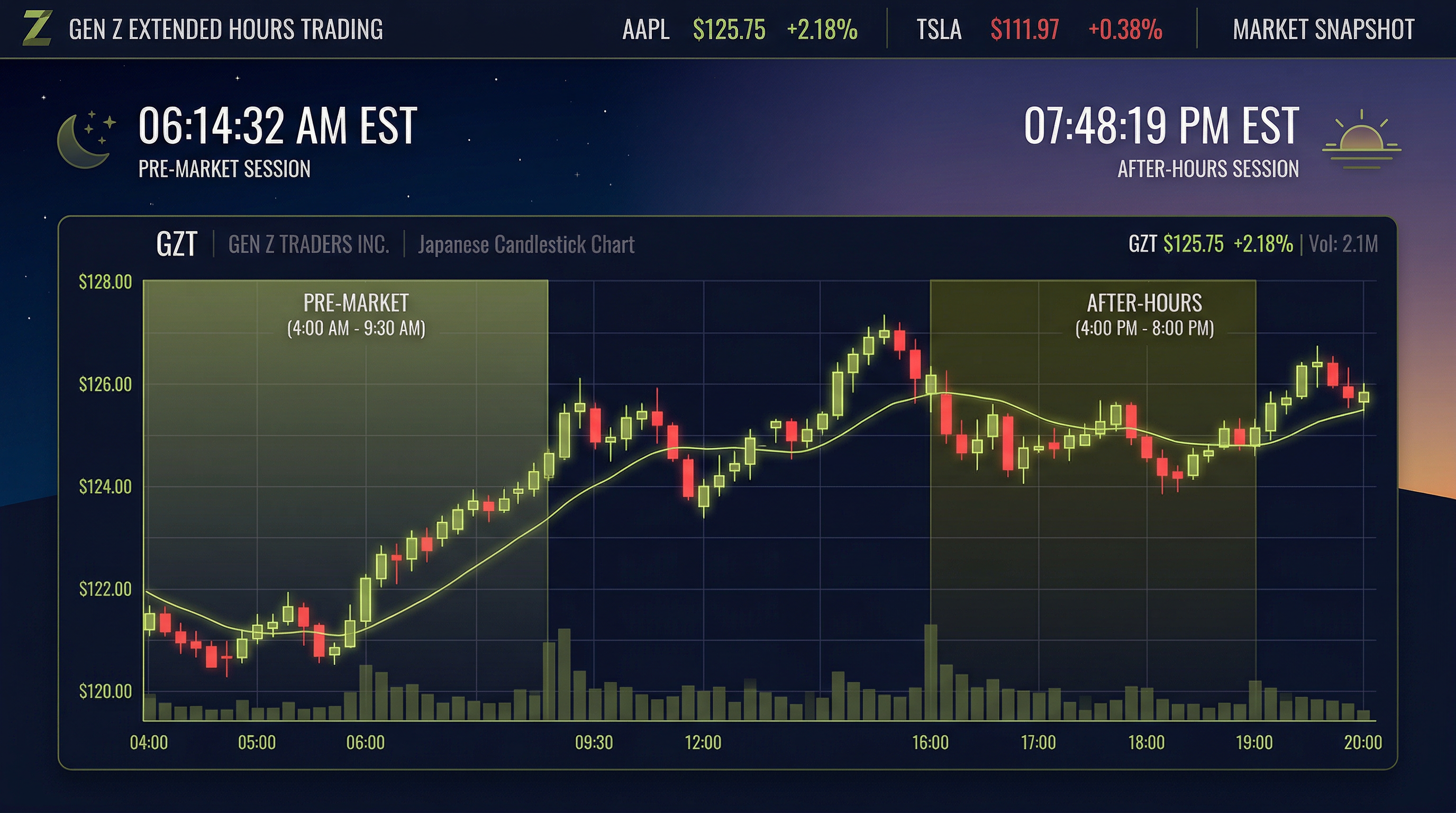
The first time I saw a stock I owned gap down 18% in pre-market, I nearly had a heart attack. I didn't even know trading happened before 9:30 AM. By the time the regular session opened, my position had recovered half the loss — but those two hours between seeing the pre-market print and the open bell were among the most stressful of my early trading life. Here's everything I wish I'd known about extended hours trading before I owned a single share.
What Are Pre-Market and After-Hours Trading Sessions?
Regular stock market hours in the U.S. are 9:30 AM to 4:00 PM Eastern Time. But trading doesn't stop there. Electronic networks allow buying and selling outside those hours:
Pre-market: Typically 4:00 AM to 9:30 AM ET (some brokers offer earlier access starting at 4 AM). This is where prices adjust to overnight news — earnings reports, economic data releases, geopolitical events.
After-hours: 4:00 PM to 8:00 PM ET. Companies frequently report earnings during this window, which is why you see big moves in stocks after the market closes.
Why Extended Hours Prices Are Different
Extended hours prices are NOT the same as regular session prices, and the differences are significant. During regular hours, the market has millions of participants trading simultaneously, creating tight bid-ask spreads and excellent liquidity. During extended hours, only a fraction of participants are active — mostly institutional traders and very active retail investors.
The Liquidity Problem
Low liquidity during extended hours means wide bid-ask spreads. A stock that normally trades with a $0.01 spread might have a $0.50–$1.00 spread in pre-market. If you buy at $50 ask and immediately need to sell, you might get $49.50 bid — a 1% loss just from the spread before the stock even moves against you. For small accounts, these friction costs are significant.
Why Prices Can Be Misleading
Pre-market prices are often initially extreme reactions to news, driven by limited volume and high emotion. A stock dropping 15% in pre-market on earnings might only open down 8% at 9:30 AM once the full market participates and weighs in. Or it might drop further. Pre-market prints tell you the market's initial reaction, but they're not necessarily where the stock will settle during regular hours.
Never panic-sell in pre-market based on an initial price reaction. Wait for the regular session to open before making any major decisions. The first 30 minutes of regular trading after a major overnight move often determines the true direction — and pre-market overreactions frequently reverse. Track these patterns using real market data on Traderise.
How Major News Events Affect Extended Hours Prices
Earnings Reports
Most companies report earnings either before market open (pre-market) or after market close (after-hours). This timing ensures the stock has time to react without creating chaos during regular trading. After a big earnings beat, you'll see the stock jump 10–20% in after-hours within minutes of the release. After a miss, sharp drops. Pre-market then continues to process the information as more analysis and reactions come in.
Federal Reserve Announcements
The Fed releases interest rate decisions at 2 PM ET — during regular hours — but FOMC meeting minutes and speeches by Fed officials often happen at other times. Major Fed announcements can cause significant moves that carry into pre-market the next day or after-hours the same day.
Economic Data Releases
Most U.S. economic reports — jobs numbers, inflation data, GDP — are released at 8:30 AM ET, exactly one hour before regular trading. This means the market processes this critical data in pre-market, and by 9:30 AM, prices already reflect the data. Understanding this prevents the beginner mistake of being surprised by a "gap" at the open caused by a data release you missed.
Practice This Strategy Risk-Free
Traderise lets you paper trade with $10,000 in virtual funds using real market data. Test every strategy in this article before you risk a single real dollar.
Start Paper Trading FreeShould Beginners Trade in Extended Hours Sessions?
Short answer: probably not, at least not actively. The risks are real:
- Wide spreads eat into returns
- Low liquidity means large orders can significantly move prices against you
- Stop-loss orders may not execute properly in thin markets
- Initial reactions are often extreme and reverse
- The advantage institutional traders have over retail in reading order flow is magnified in thin markets
What beginners should do during extended hours: monitor and analyze, not trade. Check pre-market prices on your watchlist every morning to understand what news happened overnight and how the market is initially responding. This gives you crucial context for how to approach your regular-session trading that day.
If You Do Trade Extended Hours: The Rules
If you decide to trade in extended hours sessions, follow these rules strictly:
- Use limit orders only — never market orders in thin markets
- Size positions at 25–50% of your normal trade size to account for wider spreads
- Only trade highly liquid stocks (not thinly traded small caps with minimal after-hours volume)
- Set your limit orders conservatively — wide enough to actually fill, given the spread
- Have a clear understanding of the fundamental catalyst driving the move before acting
Practice extended hours analysis using Traderise's real-time market data to understand how prices behave in these sessions before committing real capital to them.
Learn Extended Hours Trading on Real Market Data
Traderise gives you access to real market data so you can analyze pre-market and after-hours price action, understand earnings reactions, and practice your decision-making — risk free.
Try Traderise Free