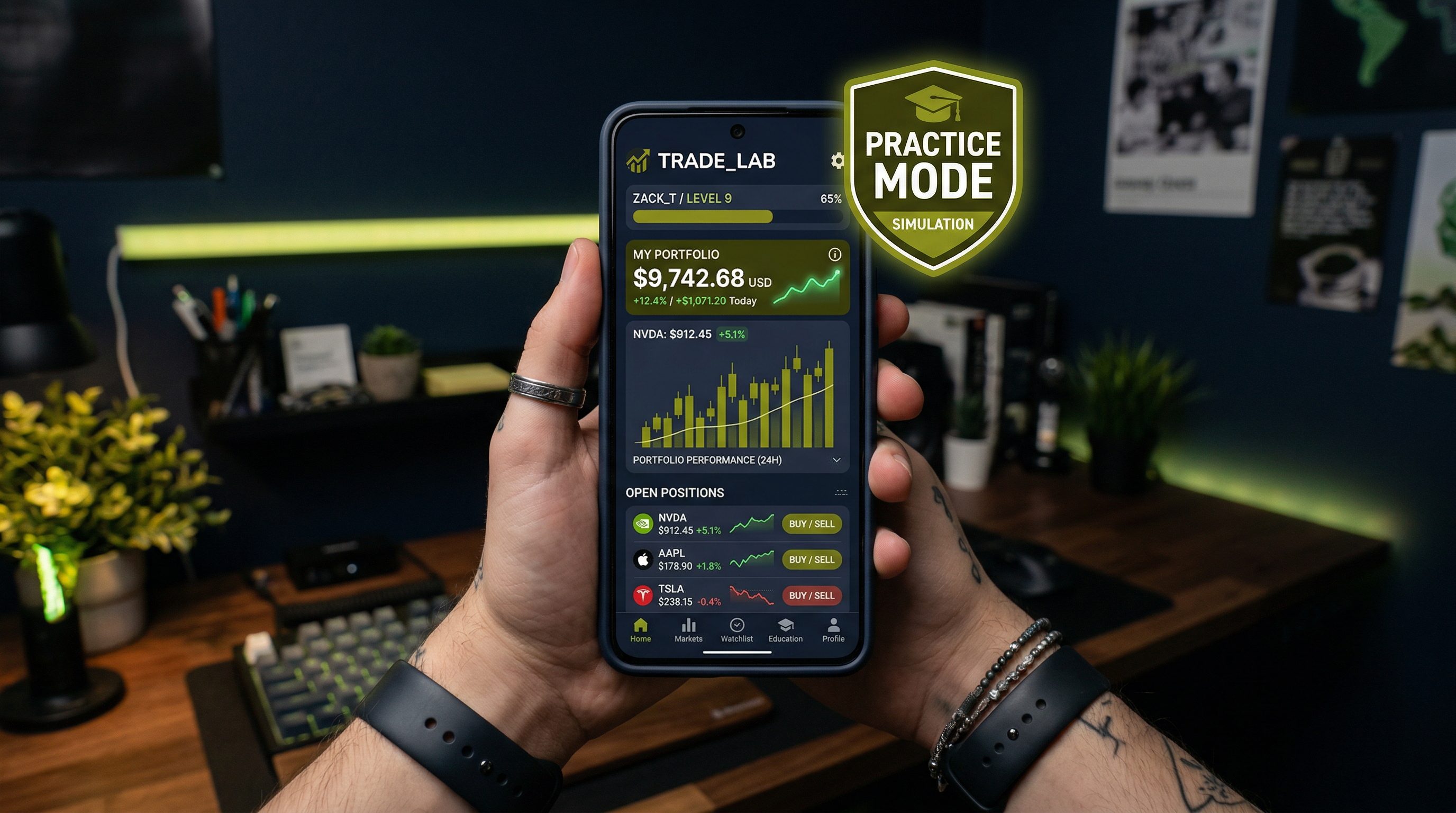
El paper trading — operar con dinero virtual en condiciones de mercado reales — es el paso más ignorado del proceso de aprendizaje del trading. La mayoría de los principiantes lo saltan porque «no se siente real». Eso es exactamente por qué lo saltan, y exactamente por qué fracasan más tarde. Aquí está lo que aprendí de 7 días siguiendo 7 estrategias diferentes, una por día.
Por Qué el Paper Trading Importa Más de lo que Piensas
El paper trading no te enseña cómo sentirte cuando pierdes dinero real. Eso es verdad. Pero sí te enseña:
- Si tu estrategia tiene sentido matemático antes de arriesgar capital real
- Cómo se ejecutan las órdenes en el mercado real (el deslizamiento, los diferenciales, el timing)
- Tus patrones de comportamiento — el FOMO, el trading de venganza, las salidas prematuras — porque aparecen incluso con dinero virtual
- Si puedes seguir tus propias reglas consistentemente
La plataforma de paper trading de Traderise usa datos de mercado en tiempo real, lo que significa que las condiciones que experimentas son idénticas a las del trading real — solo sin el riesgo.
El Desafío: 7 Estrategias en 7 Días
Día 1: Momentum Puro
Compré las acciones con el mayor movimiento del día en las primeras 2 horas de negociación. Sin investigación fundamental — solo siguiendo el momentum de precio puro. Resultado: +$340 en operaciones simuladas. Lección: el momentum funciona en los días correctos, pero es completamente aleatorio en cuáles días. Sin borde sistemático.
Día 2: Compra de la Apertura del Gap
Compré acciones que abrieron con gap alcista del 3%+ en la apertura, apostando por la continuación. Resultado: -$210. Muchos gaps se llenaron en la primera hora. Lección: los gaps de apertura necesitan contexto — ¿es una ruptura del volumen de ganancias o solo ruido aleatorio?
Día 3: Rebotes en el Nivel de Soporte
Identifiqué stocks con soportes claros usando análisis técnico previo al mercado. Compré rebotes en soporte confirmados por volumen decreciente en el retroceso. Resultado: +$485, mi mejor día. Lección: esta estrategia tiene lógica — el precio tiene memoria y los niveles de soporte realmente funcionan más a menudo de lo que fallan.
Día 4: Seguimiento de Noticias
Operar las primeras noticias — comprar acciones con titulares positivos, vender las negativas. Resultado: +$95, pero mayoritariamente por suerte. Lección: para cuando las noticias llegan al feed de noticias minoristas, el movimiento institucional ya ocurrió. Los titulares son noticias viejas.
Día 5: Estrategia RSI Sobrevendido
Filtré acciones con RSI por debajo de 30 en el gráfico diario, compré las que estaban por encima de sus medias móviles de 200 días. Resultado: +$255. Lección: el RSI sobrevendido en acciones de calidad en tendencia alcista es un setup de alta probabilidad cuando se usa correctamente con contexto.
Día 6: Estrategia de Ruptura de Volumen
Solo operar rupturas donde el volumen era 2x+ el promedio de 20 días. Resultado: +$380. Lección: el filtro de volumen mejora drásticamente la calidad de las señales de ruptura. Dos de tres rupturas de volumen alto continuaron significativamente; las de bajo volumen todas fracasaron.
Día 7: Sin Reglas (Control)
Operar por intuición pura — sin sistema, solo reaccionar a lo que parecía correcto. Resultado: -$490. Mi peor día del desafío. Lección: sin un sistema, el sesgo emocional domina cada decisión. El FOMO, el sesgo de confirmación y el pensamiento de «solo esta vez» destruyen el capital más rápido de lo que cualquier mala estrategia podría.
El paper trading revela tus hábitos de comportamiento — no solo si tu estrategia funciona. Si no puedes seguir las reglas cuando el dinero no es real, definitivamente no las seguirás cuando sea real. El paper trading es una prueba de carácter tanto como una prueba de estrategia. Empieza tu desafío en Traderise hoy.
Las 5 Lecciones de los 7 Días
1. El Contexto es Todo
Ninguna de las estrategias funcionó universalmente. Todas dependían de las condiciones del mercado. El momentum funciona en días de tendencia, fracasa en días choppy. Los rebotes en soporte funcionan en acciones de calidad en tendencias alcistas, fallan en acciones deterioradas. Primero leer el mercado, luego aplicar la estrategia.
2. El Volumen Es el Filtro Universal
Añadir un requisito de confirmación de volumen mejoró los resultados de cada estrategia que probé. Sin volumen, las señales de precio no son confiables. Con volumen, tienen respaldo real del mercado.
3. Las Reglas Te Salvan de Ti Mismo
El día sin reglas fue catastrófico. Las reglas no restringen tu creatividad — te protegen de tus peores impulsos. Las emociones son predecibles en trading; las reglas previenen que actúes sobre ellas.
4. El Mejor Setup Requiere Preparación Previa al Mercado
Mis mejores días (Día 3 y Día 6) involucrararon preparación identificando niveles de soporte y candidatos de volumen antes de la apertura del mercado. La improvisación en tiempo real rara vez produce los mejores resultados.
5. Siete Días No Son Suficientes para Evaluar Ninguna Estrategia
Siete días es demasiado pequeño una muestra para concluir que cualquier estrategia «funciona» o «no funciona». Necesitas al menos 30-50 operaciones para obtener significado estadístico. El paper trading durante al menos 60 días antes de comprometer capital real te da una muestra mucho más confiable del rendimiento esperado de tu estrategia.
Practica Esta Estrategia Sin Riesgo
Traderise te permite operar en paper trading con $10,000 en fondos virtuales usando datos reales del mercado. Prueba cada estrategia de este artículo antes de arriesgar un solo dólar real.
Empieza a Operar en Paper Trading GratisCómo Hacer Tu Propio Desafío de Paper Trading
Si quieres replicar este experimento:
- Elige una estrategia específica para probar durante al menos 2 semanas (no solo 1 día)
- Escribe las reglas exactas antes de comenzar — entradas, stops, objetivos, tamaño de posición
- Registra cada operación con tu razonamiento en el momento de la entrada
- Revisa semanalmente: ¿Estás siguiendo tus reglas? ¿Qué patrones emergieron?
- No cambies la estrategia hasta que tengas al menos 30 operaciones de muestra
Usa Traderise para el paper trading — los datos de mercado en tiempo real y la interfaz limpia hacen el seguimiento mucho más fácil que la mayoría de los simuladores. El proceso de documentar y revisar tus operaciones es donde ocurre el aprendizaje real.
Empieza Tu Propio Desafío de Paper Trading
Elige tu estrategia, escribe tus reglas y comienza con $10,000 en fondos virtuales en Traderise. 60 días de paper trading disciplinado vale más que 600 horas de ver videos de YouTube.
Prueba Traderise Gratis