Paper Trading vs Real Trading: I Did Both for 60 Days (Here’s What Changed)
Paper trading is like rehearsing a fight in slow motion. Real trading is when someone actually hits back. I did both for 60 days and the difference was not “better indicators.” It was execution, emotions, and sizing.
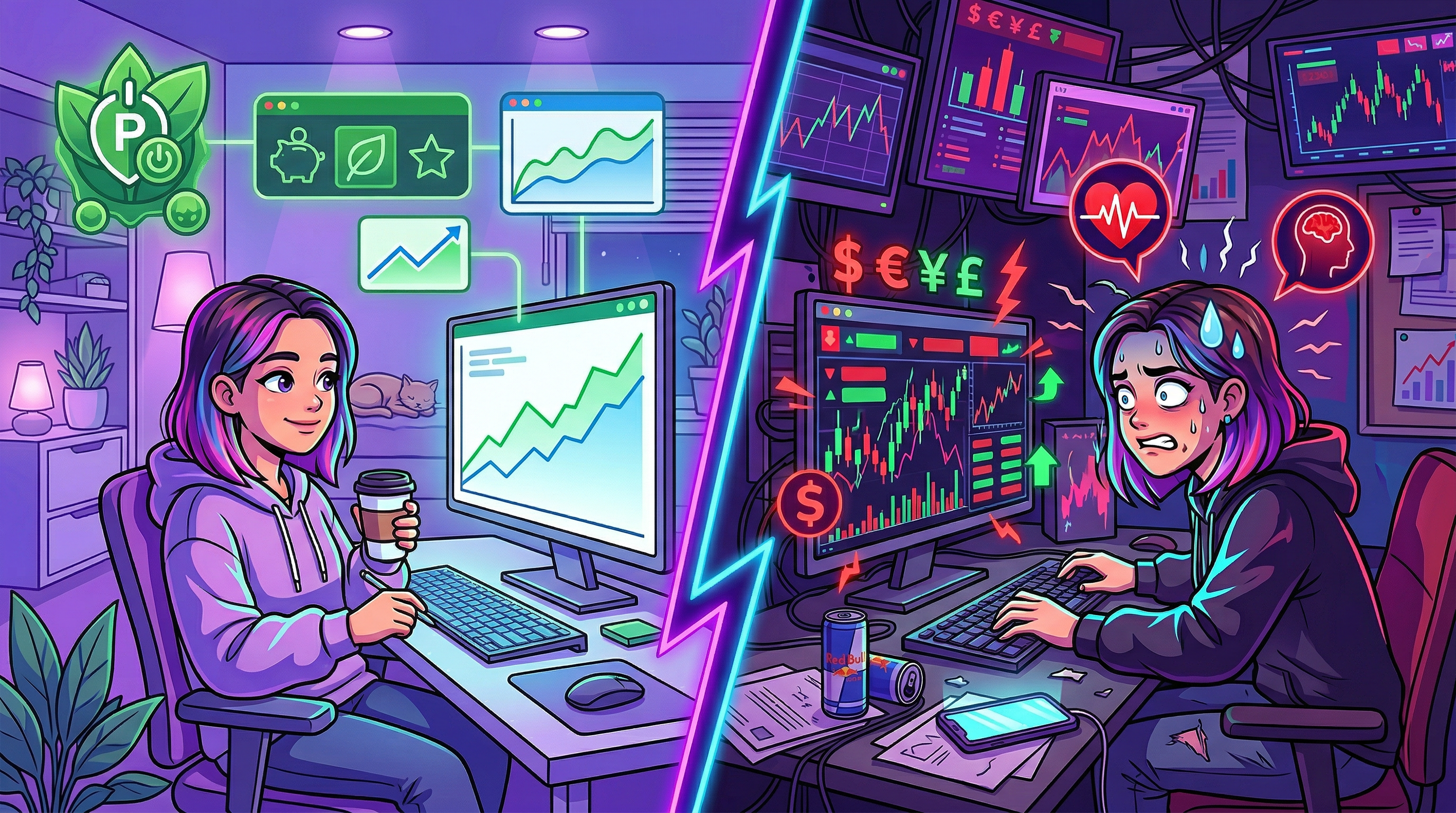
I’m going to say something that might save you money: paper trading can make you overconfident. Not because it’s “fake,” but because it removes the two things that punish beginners the fastest: slippage and stress.
At the same time, jumping straight into real money is how people turn a $500 account into a life lesson in about 17 minutes.
This article is my playbook for the transition—what paper trading is actually good for, what it lies about, and how to go live without doing the classic beginner speedrun: overtrade → revenge trade → blow up → uninstall app.
And yes, I’ll show you a clean workflow you can run on Traderise (paper mode first, then live) so you’re not just reading… you’re actually practicing.
1) Paper trading vs real trading: the honest definition
Paper trading (simulation)
Paper trading is placing trades with pretend money in a simulator. Your P&L moves, your chart looks real, and your brain gets to feel like a genius without paying tuition.
Paper trading is great for:
- Learning order types (market, limit, stop) without panic-clicking.
- Testing a strategy’s rules: entries, exits, stop-loss logic.
- Building habits: watchlist, alerts, journaling.
Real trading (live)
Real trading is the same buttons… but now your nervous system is in the trade with you. Real trading introduces:
- Emotions (fear, FOMO, revenge, “just one more trade”).
- Execution friction (spreads, partial fills, slippage).
- Consequences (your capital is the scoreboard).
If your strategy only works when you feel nothing, it doesn’t work. Your system has to survive your worst mood, your worst timing, and your most distracted day.
2) The biggest lie paper trading tells you (and why it happens)
Paper trading is basically “perfect conditions mode.” That means you’ll often get fills that feel cleaner than reality—especially on fast moves.
In real trading, the market doesn’t care about your entry line. You might click buy and get filled a few cents worse (or more). That gap is called slippage. And it matters most when you’re trading small accounts, because a little extra cost is a big % of your risk.
Paper trading also lets you do something you’d never admit: you cheat. You say you followed your rules, but you didn’t. You move the stop “just this once.” You close the app when the trade goes red. You’re basically playing a game with a save file.
So here’s the vibe: paper trading is for building process. Real trading is for proving discipline.
3) What the data says: most people don’t paper trade for a year
Whenever someone asks, “How long should I paper trade?” the internet gives two types of answers:
- “Paper trade for 6 months minimum.”
- “Paper trading is useless, go live ASAP.”
The truth is in the middle, and we actually have numbers. Alpaca Markets analyzed Trading API users who placed a live trade between June 1, 2024 and May 31, 2025 and looked at how long people stayed in paper mode before going live. In the group that started with paper trading, 57.1% placed their first live trade within 30 days, and 75.1% (reported as 75.2% in one place) did it within 60 days (Alpaca Markets data-backed guide).
That tells me two things:
- Most people don’t paper trade forever. They transition.
- The real question isn’t “how long,” it’s “what conditions should be true before I switch?”
Want to paper trade like it’s real (without the ego)?
Use Traderise to run the exact same routine: watchlist → entry plan → paper execution → journal → review. Then flip to small-size live when you hit your rules.
Try Traderise Free →4) My 60-day experiment: same strategy, different results
Here’s what I did (and what I recommend if you’re serious):
- Days 1–30: paper trading only, one simple setup, strict rules.
- Days 31–60: live trading, tiny size, same setup, same rules.
The setup doesn’t matter as much as the consistency. Pick something boring and repeatable (like breakout retests, support/resistance bounces, or a moving average pullback). You’re not hunting dopamine. You’re training a system.
What changed immediately when I went live
- I took profits too early. Green felt fragile, like it could vanish if I blinked.
- I hesitated on entries. In paper, I’d click. Live? I’d negotiate with myself.
- I moved my stop. I told myself I was “giving it room.” That was coping.
- I traded less. Not because I became disciplined—because I became scared.
Paper trading builds confidence. Live trading reveals whether that confidence was real.
5) The cleanest way to transition: 3 gates (not a calendar)
If you want a simple “go live” checklist, here it is. You don’t need 12 months. You need these gates:
Gate 1: You have rules that fit on one screen
Write your strategy as rules, not vibes. Example:
- Only trade stocks above $5 with average volume > 1M.
- Entry: break and retest of prior day high, confirmed by volume spike.
- Stop: below retest low (risk must be ≤ 1% of account).
- Take profit: 2R target or trail under higher lows.
If you can’t explain your trade in two sentences, you’re probably improvising.
Gate 2: You can execute the rules without “emergency edits”
You should be able to paper trade your plan without moving stops, adding random indicators mid-trade, or taking entries because “it looks like it wants to go.” If you’re doing that in paper mode, you’ll do it harder in live mode.
Gate 3: You’ve seen your setup lose… and you didn’t spiral
This is the real test. A strategy is not “broken” because it loses three trades in a row. What breaks accounts is the spiral after those losses.
Your first goal isn’t profit. It’s survival. If you can’t survive the learning phase, you never reach the profitable phase.
6) The micro-size live plan (the one nobody wants because it’s boring)
Here’s the version that works for small accounts and normal people with jobs/classes:
- Start live with the smallest size you can. Fractional shares are fine. The goal is emotional realism, not cashout screenshots.
- Risk a fixed amount per trade. Not “whatever feels right.” Fixed.
- One setup, one session. Don’t become a strategy collector.
- Journal every trade. Screenshot the entry/exit, write why, write how you felt.
If you want an easy place to do that workflow (especially the paper-to-live transition), Traderise is built for learning and repetition, not just “buy button go brrr.”
7) Paper trading vs real trading: the beginner mistakes that cost the most
Mistake #1: Treating paper profits as proof
Paper profits are proof that your idea could work. They are not proof that you can execute it.
Mistake #2: Going live at full size
Your first live trades should be “tuition-sized.” Small enough that a loss doesn’t trigger revenge trading.
Mistake #3: Switching strategies every week
If you change strategies every time you lose, you never learn whether the strategy works. You only learn that markets are random sometimes (they are).
Mistake #4: Ignoring costs (spread, fees, slippage)
In paper mode, those costs are invisible. In live mode, they can be the difference between “green” and “why am I always down $12?”
8) My take: which one should you do in 2026?
Do both. But do them with intention.
- Paper trade to learn the platform and prove your rules make sense.
- Go live small to train your execution under pressure.
And if you’re wondering what “small” means: small enough that you can take a normal loss and still sleep. The moment you’re staring at your phone like it owes you money, you sized too big.
Ready to turn this into a routine?
Start in paper mode on Traderise, journal 30–60 days, then switch to micro-size live trades once you hit the 3 gates. Keep it boring. Let boring make you rich.
Start Trading on Traderise →Sources: Alpaca Markets — Paper Trading vs. Live Trading (data-backed).