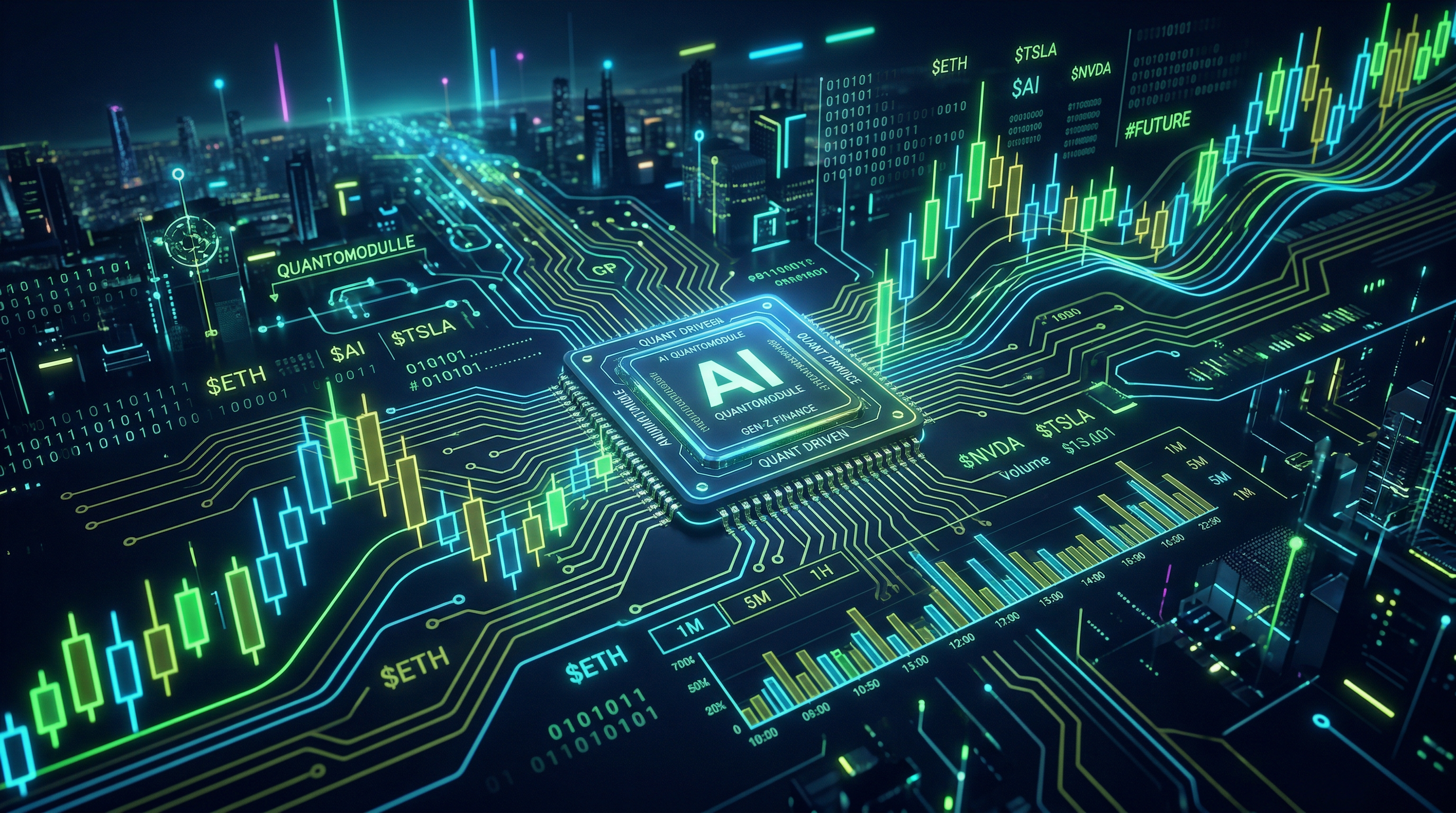
A estas alturas, todo el mundo conoce NVIDIA. Todo el mundo sabe que Microsoft tiene Copilot. Todo el mundo sabe del boom de la IA. Pero esto es lo que el discurso sobre "acciones de IA" pasa por alto sistemáticamente: las mayores ganancias en el ciclo de la IA no siempre se obtienen comprando las empresas más obvias después de que ya han subido un 300%. En 2026, la construcción de infraestructura de IA está en pleno auge — y hay jugadas que la mayoría de los inversores de la Generación Z aún no están mirando. Aquí es donde yo estoy poniendo atención.
A Dónde Va Realmente la Inversión en IA: La Capa de Infraestructura
Por cada dólar gastado en modelos y software de IA, varios dólares van a la infraestructura subyacente que hace posible la IA: chips, centros de datos, energía, refrigeración y redes. Esta capa de "picos y palas" — empresas que venden las herramientas para la fiebre del oro de la IA en lugar de hacer la minería ellas mismas — a menudo ofrece mejores retornos ajustados al riesgo que las apuestas puras de software de IA.
El Problema Energético
Uno de los aspectos más subestimados del boom de la IA en 2026 es su demanda energética. Un solo centro de datos de IA puede requerir tanta energía como 50,000 hogares. El escalado masivo de la computación de IA ha creado una demanda extraordinaria de electricidad que la red existente no fue diseñada para manejar. Las empresas que generan, transmiten o permiten un consumo eficiente de energía para los centros de datos están experimentando un crecimiento de demanda transformacional.
El Cuello de Botella en Redes
A medida que las cargas de trabajo de IA escalan, el cuello de botella se ha convertido cada vez más en la velocidad con que los datos se mueven entre chips y servidores — la capa de redes. Las empresas que fabrican hardware de redes de alta velocidad específicamente optimizado para interconexiones de IA han experimentado un crecimiento explosivo de ingresos en 2025–2026.
Más Allá de NVIDIA: 6 Sectores Adyacentes a la IA que Vale la Pena Vigilar
1. Silicon Personalizado / Chips de Aplicación Específica (ASICs)
Las GPUs de NVIDIA dominan el entrenamiento de IA, pero para la inferencia de IA (ejecutar modelos entrenados a escala), los chips personalizados diseñados para cargas de trabajo específicas de IA pueden ser significativamente más eficientes. Los hiperescaladores — Google, Amazon, Microsoft — están todos diseñando sus propios chips personalizados. Las empresas que diseñan ASICs para aplicaciones de IA representan una gran oportunidad de crecimiento en 2026.
Dinámica clave: a medida que los volúmenes de inferencia de IA escalan (cada búsqueda en Google, cada consulta de ChatGPT es inferencia de IA), la economía del silicon personalizado frente a las GPUs de propósito general se vuelve cada vez más convincente. Se trata de un cambio estructural continuo, no de una tendencia.
2. REITs y Operadores de Centros de Datos
Los edificios físicos que albergan la computación de IA — los centros de datos — representan otra apuesta de infraestructura. Los REITs y operadores especializados de centros de datos están viendo una demanda extraordinaria de nueva capacidad. Los tiempos de espera para nueva capacidad de centros de datos en ubicaciones privilegiadas se han extendido a años en algunos mercados. Las empresas que ya poseen y operan capacidad de centros de datos están en una posición ventajosa.
3. Generación de Energía e Infraestructura de Red
La energía nuclear ha surgido como un foco serio para las empresas de IA que buscan energía de base confiable y libre de carbono. En 2024–2025, Microsoft, Google y Amazon firmaron acuerdos significativos de energía nuclear. Las empresas de minería y procesamiento de uranio, los operadores de plantas nucleares y las empresas de infraestructura eléctrica que atienden la carga de centros de datos han visto un interés renovado. Por separado, las plantas de gas natural de pico y las empresas de infraestructura de red que gestionan el escalado rápido de energía también son relevantes.
4. Tecnología de Refrigeración
Los chips de IA modernos generan un calor enorme. La refrigeración por aire tradicional es cada vez más inadecuada para los despliegues de computación de IA más densos. Las empresas de tecnología de refrigeración líquida e inmersión están recibiendo inversiones serias y contratos de despliegue de los operadores de centros de datos más grandes. Se trata de un mercado más pequeño y de nicho, pero con tasas de crecimiento muy altas.
5. Ciberseguridad con IA
La IA crea nuevas vulnerabilidades de seguridad — y también nuevas soluciones de seguridad. Las empresas de ciberseguridad nativas de IA que utilizan aprendizaje automático para detectar y responder a amenazas más rápido que los equipos de seguridad humanos representan una de las apuestas de software empresarial más convincentes en 2026. Los presupuestos de seguridad se están expandiendo rápidamente a medida que el panorama de amenazas se vuelve más sofisticado con los ataques asistidos por IA.
6. IA Aplicada en Salud y Descubrimiento de Fármacos
El descubrimiento acelerado de fármacos con IA tiene el potencial de comprimir el típico cronograma de desarrollo de medicamentos de 10–15 años de forma drástica. Varias empresas biotecnológicas nativas de IA demostraron resultados significativos de prueba de concepto en 2024–2025. Se trata de un espacio de alto riesgo y alta recompensa — estas empresas revolucionarán la medicina o no lograrán comercializar. Para los inversores tolerantes al riesgo, la oportunidad es significativa.
En la inversión temática (IA, energía limpia, etc.), el enfoque con mejor ajuste de riesgo suele ser una estrategia de cesta: en lugar de intentar elegir al único ganador, compra un ETF diversificado o entre 5 y 8 nombres individuales dentro del tema. Esto limita el riesgo de un solo nombre mientras sigue capturando el viento de cola temático. Sigue el rendimiento de tu cesta de IA junto a los índices de referencia del mercado en general en Traderise.
Practica Esta Estrategia Sin Riesgo
Traderise te permite hacer paper trading con $10,000 en fondos virtuales usando datos reales del mercado. Prueba cada estrategia de este artículo antes de arriesgar un solo dólar real.
Empieza a Operar en Papel GratisETFs de IA: El Enfoque Diversificado
Para los inversores que quieren exposición a la IA sin elegir nombres individuales, varios ETFs ofrecen acceso diversificado:
BOTZ: Global X Robotics & AI ETF — se enfoca en empresas de automatización y robótica junto a la IA.
AIQ: Global X Artificial Intelligence & Technology ETF — exposición más amplia a software y hardware de IA.
ROBO: ROBO Global Robotics & Automation ETF — automatización industrializada con componentes de IA.
Para una exposición a la IA más enfocada en infraestructura, los ETFs de semiconductores como SOXX (iShares Semiconductor ETF) capturan el lado de fabricación de chips del comercio de IA con más diversificación que la exposición pura a NVIDIA.
Factores de Riesgo que Todo Inversor en IA Debe Conocer
El caso alcista de la IA es convincente. Los riesgos son reales:
Valoración estirada: Muchas empresas adyacentes a la IA cotizan a múltiplos de ingresos históricamente altos. Si el crecimiento de ingresos decepciona o las condiciones macroeconómicas se deterioran, la compresión de múltiplos podría compensar incluso un crecimiento sólido.
Dinámica competitiva: La IA avanza rápido. Una empresa con una posición dominante hoy podría verla erosionada por un modelo mejor, un chip más barato o un cambio regulatorio en 12–18 meses. La diversificación es esencial.
Riesgo regulatorio: Los gobiernos de todo el mundo están desarrollando regulaciones de IA. Dependiendo de cómo evolucionen las normas, ciertas aplicaciones o empresas de IA podrían enfrentar restricciones materiales.
Posicionamiento en el ciclo de hype: Podríamos estar en la fase de "pico de expectativas infladas" del ciclo de hype de la IA. El despliegue en el mundo real se está acelerando, pero el camino hacia la monetización de muchas aplicaciones de IA todavía no está claro. Procede con un tamaño de posición medido, no con apuestas concentradas.
Usa las herramientas de paper trading de Traderise para construir y probar un portafolio del sector de IA con capital virtual, comprendiendo el perfil de volatilidad antes de comprometer capital real significativo en este espacio.
Construye Tu Portafolio del Sector de IA Sin Riesgo
Investiga y haz paper trading de acciones de infraestructura de IA en Traderise — prueba tu tesis con $10,000 en capital virtual antes de comprometer dinero real en uno de los temas más candentes de 2026.
Prueba Traderise Gratis