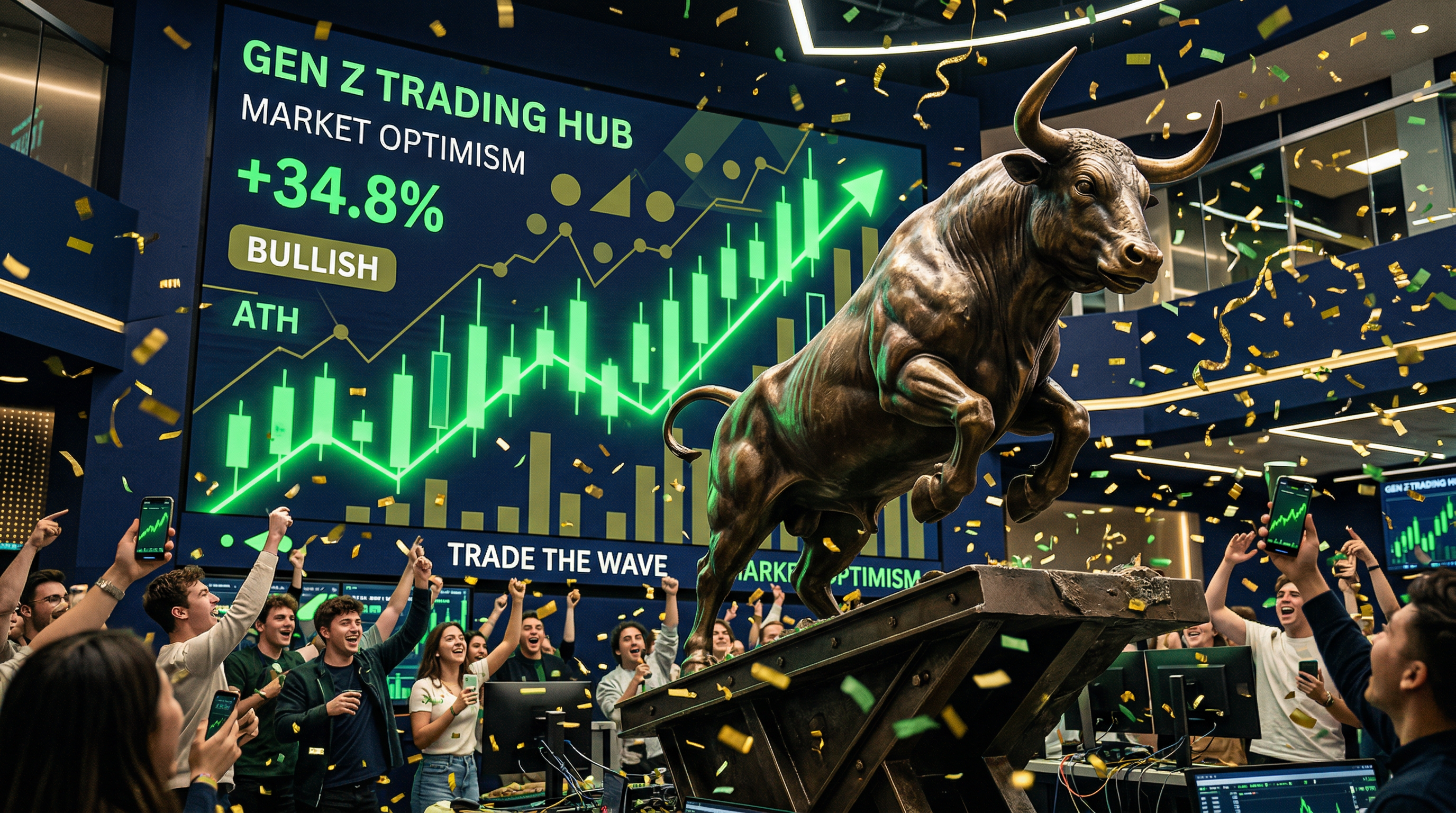
En 2026, si has seguido las noticias financieras últimamente, probablemente has escuchado «mercado alcista» lanzado como si fuera confeti. Pero pasé mi primer año invirtiendo sin entender realmente qué significaba — más allá de «las acciones suben, bueno». Eso me costó oportunidades reales. Aquí está la explicación real y, más importante, el plan de juego para aprovechar al máximo la situación mientras dure.
Porque aquí está lo que nadie te dice sobre los mercados alcistas: no duran para siempre, y las personas que más pierden son frecuentemente las que se unieron tarde y no tenían estrategia de salida. Asegurémonos de que ese no seas tú.
Mercado Alcista 101: La Definición que Realmente Tiene Sentido
Un mercado alcista se define técnicamente como un aumento del 20% o más en los precios de las acciones desde un mínimo reciente, sostenido durante un período de al menos dos meses. Esa es la respuesta del libro de texto. En la práctica, un mercado alcista es un período prolongado de optimismo de los inversores, expansión económica y precios de activos en alza en amplios sectores del mercado.
El término «alcista» (bull) viene de la forma en que ataca un toro — empujando sus cuernos hacia arriba. Las acciones cargando hacia arriba. Lo contrario es un mercado bajista (bear market), donde los precios caen un 20% o más (un oso baja sus garras). Estos no son solo términos académicos — entender dónde estás en el ciclo del mercado cambia todo sobre tu estrategia.
¿Cuánto Duran los Mercados Alcistas?
Históricamente, el mercado alcista promedio dura alrededor de 4.5 años. El más largo en la historia de EE.UU. fue de marzo de 2009 a febrero de 2020 — más de 11 años. ¿El más corto? Solo unos meses. En 2026, los mercados se han recuperado fuertemente de la corrección de mediados de 2024, y muchos analistas llaman a esto la fase temprana a media de un nuevo ciclo alcista. Eso es potencialmente una gran noticia si sabes cómo aprovecharlo.
Mercado Alcista vs. Solo un Rally — ¿Cuál Es la Diferencia?
Un rally es un rebote a corto plazo — puede durar días o semanas. Un mercado alcista es una tendencia ascendente sostenida, de varios meses, con amplia participación entre sectores. La diferencia clave es la amplitud: en un mercado alcista real, no son solo las acciones tecnológicas las que suben — son los financieros, el consumo discrecional, los industriales, la salud. Cuando todo sube junto, esa es una señal de mercado alcista.
7 Señales de que Estás en un Mercado Alcista Ahora Mismo
¿Cómo identificas uno realmente? Esto es lo que debes buscar:
1. Los Principales Índices Están Marcando Nuevos Máximos
Cuando el S&P 500, el Nasdaq y el Dow Jones Industrial Average están alcanzando nuevos máximos históricos o recuperándose rápidamente de las caídas, eso es alcista. Un solo índice no es suficiente — quieres amplia participación del mercado.
2. Los Datos Económicos Son Sólidos (o Mejorando)
El desempleo bajo, el crecimiento del PIB y los resultados corporativos positivos alimentan los mercados alcistas. En 2026, con las ganancias de productividad impulsadas por la IA que impulsan los márgenes corporativos en todos los sectores, las ganancias han sido un motor clave.
3. El VIX Está Bajo y Tranquilo
El VIX (Índice de Volatilidad, frecuentemente llamado el «medidor del miedo») típicamente cae por debajo de 20 en mercados alcistas y se mantiene ahí. Los picos por encima de 30 señalan miedo e inestabilidad. VIX bajo = confianza del mercado = condiciones alcistas.
4. La Actividad de OPIs Está Aumentando
Las empresas salen a bolsa cuando creen que el mercado las valorará altamente. Un aumento en OPIs y SPACs es una señal clásica de mercado alcista — el optimismo corporativo es contagioso.
5. La Confianza del Consumidor Es Alta
Cuando la gente se siente bien con la economía, gasta más. Más gasto significa mejores ingresos corporativos. Mejores ingresos significan precios de acciones más altos. Es un ciclo que se refuerza a sí mismo — hasta que no lo hace.
6. Rotación Sectorial hacia Cíclicos
En mercados alcistas, el dinero fluye de sectores defensivos (servicios públicos, consumo básico) hacia cíclicos (tecnología, discrecional, financiero). Observa dónde está rotando el dinero grande — eso te dice en qué fase del mercado alcista estás.
7. Cada Caída Se Compra
Una de las señales más confiables del mercado alcista: las caídas bruscas se compran agresivamente en días. Si una caída del 3% se revierte en una semana, los alcistas están en control. Cuando las caídas empiezan a tomar meses para recuperarse, el mercado alcista se está cansando.
En un mercado alcista, tu mayor enemigo no es elegir la acción equivocada — es quedarte en efectivo porque estás «esperando una mejor entrada». El tiempo en el mercado supera al timing del mercado, especialmente cuando la tendencia está de tu lado. Herramientas como Traderise te ayudan a practicar la compra en tendencias alcistas sin el miedo de perder dinero real primero.
Cómo Ganar Dinero Realmente en un Mercado Alcista
Saber que es un mercado alcista es el primer paso. Obtener ganancias realmente es el segundo. Aquí está cómo.
No Pienses Demasiado — Compra a los Líderes
En cada mercado alcista, ciertos sectores y acciones lideran. En el mercado alcista de principios de los 2010, fueron los financieros recuperándose de la crisis. En el mercado alcista de 2020, fue tecnología y comercio electrónico. En 2026, la infraestructura de IA y la energía limpia muestran la mayor fortaleza relativa. Encuentra a los líderes — las acciones que consistentemente marcan nuevos máximos mientras el mercado cae — y cabalga con ellos.
Usa las Caídas como Puntos de Entrada
Los mercados alcistas tienen correcciones — caídas repentinas del 5–15% que asustan a los inversores más nuevos a vender justo antes de la recuperación. Estas caídas son regalos. El truco es tener una lista de seguimiento lista antes de que ocurra la caída para poder actuar con convicción en lugar de pánico. Mantén una lista de 10–15 acciones que te encantaría poseer con descuento y establece alertas de precio en Traderise para saber el momento en que alcanzan tu entrada objetivo.
No Abandones la Gestión de Riesgo
Aquí es donde los mercados alcistas matan a los inversores no preparados. Cuando todo sube, la gestión de riesgo parece innecesaria. ¿Por qué usar stop-losses cuando las acciones siguen recuperándose? Pero cada mercado alcista termina, y cuando llega el bajista, los inversores sin gestión de riesgo quedan absolutamente destrozados. Mantén el dimensionamiento de posiciones disciplinado incluso cuando se siente excesivamente cauteloso.
Practica Esta Estrategia Sin Riesgo
Traderise te permite operar en paper trading con $10,000 en fondos virtuales usando datos reales del mercado. Prueba cada estrategia de este artículo antes de arriesgar un solo dólar real.
Empieza a Operar en Paper Trading GratisLos 3 Mayores Errores de los Principiantes en un Mercado Alcista
Error 1: Perseguir Acciones Parabólicas en el Techo
Una acción que subió un 200% en 6 meses se siente como una compra obligatoria. Pero comprar tarde un movimiento parabólico es una de las formas más rápidas de perder dinero. Para cuando una acción está por toda la FinTwit y Reddit, la mayoría de las ganancias fáciles ya se fueron. Busca los próximos líderes, no los actuales que ya están sobreextendidos.
Error 2: Asumir que el Mercado Alcista Durará para Siempre
Los mercados alcistas se sienten permanentes cuando estás dentro de ellos. No lo son. Todo mercado alcista histórico ha terminado. Ten un plan para cuando cambie la tendencia — ¿qué señales te dirán que el mercado alcista terminó? (Pista: múltiples intentos fallidos de romper nuevos máximos, amplitud decreciente, VIX subiendo por encima de 30 y ganancias debilitándose, todo importa.)
Error 3: No Invertir en Absoluto Porque «El Mercado Parece Caro»
Conozco personas que se perdieron todo el mercado alcista 2020–2021 porque pensaban que las valoraciones eran demasiado altas. Esas mismas personas vieron el mercado subir otro 40% antes de corregir. «Parece caro» no es una estrategia de timing. El promedio de costo en dólares en activos de calidad, independientemente de dónde estén las valoraciones, supera consistentemente a intentar llamar el techo.
Sectores del Mercado Alcista para Observar en 2026
No todos los sectores tienen el mismo rendimiento. Basándose en las condiciones macro actuales en 2026, aquí está donde está concentrado el momentum:
Inteligencia Artificial y Semiconductores: La construcción de infraestructura para IA todavía está en sus primeras etapas. Los diseñadores de chips, operadores de centros de datos y empresas de software de IA están recibiendo flujos institucionales consistentes.
Transición Energética: Las acciones de energía limpia sufrieron en 2023–2024 pero se están recuperando fuertemente a medida que los vientos de cola regulatorios y los mandatos de sostenibilidad corporativa aceleran la inversión.
Servicios Financieros: Las tasas de interés más altas por más tiempo benefician a bancos y compañías de seguros. Las acciones financieras históricamente superan en mercados alcistas de ciclo medio.
Salud y Biotecnología: La demografía envejeciente y el descubrimiento acelerado de fármacos por IA están creando un viento de cola de varios años. La biotecnología tiende a ser volátil, pero los ETFs sectoriales ofrecen exposición diversificada.
Cómo Construir un Portafolio de Mercado Alcista Desde Cero
Si comenzara de nuevo con $1,000 en un mercado alcista confirmado, así es como lo pensaría:
- 60% en ETFs de mercado amplio (como SPY o QQQ) para capturar las ganancias generales del mercado alcista sin riesgo de selección de acciones
- 25% en líderes sectoriales — 2–3 acciones individuales sólidas en sectores líderes
- 15% como munición — efectivo listo para desplegar en la próxima caída
A medida que tu portafolio crece y tu conocimiento se profundiza, puedes cambiar más hacia acciones individuales. Pero empezar con una asignación pesada en ETFs te da exposición al mercado alcista mientras limita el daño si una de tus selecciones de acciones sale mal.
Usa Traderise para simular la construcción de este portafolio con dinero de paper trading primero. Rastrea tus decisiones, observa cómo se comporta el portafolio a través de los movimientos del mercado y desarrolla la convicción para actuar cuando uses capital real.
Cuándo Saber que el Mercado Alcista Está Terminando
Todo mercado alcista necesita una estrategia de salida. Vigila estas señales de advertencia:
- El S&P 500 cae por debajo de su media móvil de 200 días y se mantiene ahí durante semanas
- Las guías de ganancias corporativas empiezan a perderse las expectativas de forma generalizada
- La curva de rendimiento se invierte (las tasas a corto plazo superan a las de largo plazo)
- El VIX se dispara por encima de 30 y se mantiene elevado
- El mercado de OPIs se seca de repente
- Las acciones de alto crecimiento que lideraron el rally empiezan a tener un rendimiento dramáticamente inferior
No necesitas llamar exactamente al techo — eso es imposible. Solo necesitas reducir el riesgo gradualmente a medida que estas señales se acumulan. Reduce el tamaño de posición, rota hacia activos defensivos, sube los niveles de efectivo. El objetivo es participar en el mercado alcista sin devolver todas las ganancias cuando cambie.
Practica Aprovechar los Mercados Alcistas Sin el Riesgo
Construye un portafolio simulado de mercado alcista en Traderise, practica identificar líderes sectoriales y prueba tus estrategias de entrada/salida con datos reales del mercado — todo con fondos virtuales.
Prueba Traderise Gratis